Monday, 29 April 2013
In the Presence of the Divine
This weekend I came across this video on my Twitter feed. The headline - "Some Strange Things Are Happening to Astronauts Returning to Earth" - piqued my interest (because I've watched far too many sci-fi/horror type flicks), so I clicked on it and started watching, and quickly found myself captivated for the entire 20-minute running time.
The footage is all pretty stunning - from the glimpses out the window down to the earth below, to the shock of recognizing the outlines of coastlines, to the time-lapse sequences showing cities lighting up at night or auroras shimmering in the atmosphere, this video was one of the most beautiful things I've seen in a while. That, and the sense the astronauts describe of feeling awe, got me thinking about how we react to things that are so profoundly bigger than we are.
Now, I've already written about religion on this blog. But I feel it's worth adding that pictures of space - particularly of deep space - have always filled me with something close to religious awe, to an extent that I've never gotten from being in church. This is probably why I've always enjoyed Star Trek and other ship shows so much: there really was a sense of wonder at the sights we were seeing each week. And this extended to shows like Babylon 5, which used actual shots from the Hubble space telescope as backdrops, as well as Firefly, later on. But frankly, even sitting on a hill out in the country and watching the sky was enough for me.
Perhaps I'm a hopeless romantic. But there's something mind-expanding about looking up at the limitless ocean of night above you, lazily pointing to a star, and announcing, "I want to go there."
I wish more of us did that, and that we didn't stop after a certain age. Maybe we'd get to go out and see those things for real.

Sunday, 21 April 2013
Form Follows Function, or Where are all the fantasy short stories?
I've been musing over the last couple of days about the difference between science fiction and fantasy, and the different story lengths for each. This is probably a gross generalization (and also probably not the most original thought), but it seems that science fiction as a mode fits the short story form better than epic fantasy in the Tolkien or Game of Thrones mold, and I'm interested in why that is.
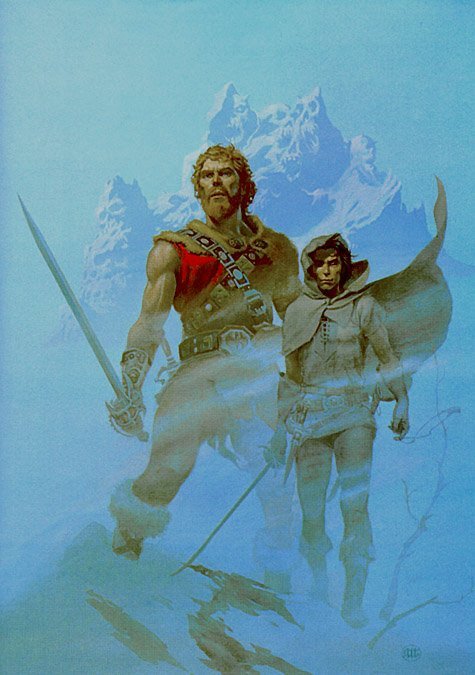
First of all, I think it's worth pointing out that I mentioned a specific type of fantasy above: epic fantasy as distinct from sword and sorcery, steampunk and urban fantasy. Sword and sorcery, at least as typified by, for example, Fritz Leiber's Lankhmar stories, is very well-suited to the shorter form, and given how much overlap there is between it and epic fantasy, might present a key argument against my thesis above. In fact, you could even argue that sword and sorcery is epic fantasy specifically adapted for short stories.
But I feel that analogy starts to break down, because of the absolute preponderance of gigantic fantasy novels on bookshelves these days, and the near-total lack of work in that genre in the short form (apart from George RR Martin and Gardner Dozois's recent anthologies). But even urban fantasy seems to be best delivered in the form of series of full novels, though notably shorter than those in epic fantasy. As for steampunk, a genre I haven't read much of, it seems to me that it straddles the line between SF and plain old F - and even there you don't see huge amounts of short story length work.
Economics probably sheds more of a light on this. My understanding is that writing novels pays better than writing short stories - at the very least, GRRM's brick-sized tomes are easier to stock than, say, Daniel Abraham's "The Cambist and Lord Iron", which means they're easier to sell. And yet...
Looking through the listings of speculative fiction magazines, it's clear that science fiction still dominates that scene. And even though he's not a household name like George RR Martin is (at least, in my household), Ted Chiang has still made a name for himself writing almost exclusively in the short story or novelette forms. So there's more to this than the fact that the trend in bookstores now is for ever-bigger novels - and let's be honest, there are few science fiction authors out there, apart from Peter F Hamilton, coming out with series of doorstopper novels.
Maybe you could argue that there's less to explain with more futuristic stories, although I don't think that's necessarily true. Another argument is that science fiction effectively spread into the mass market through short stories published in pulp magazines, although that ignores the work of Robert E Howard or HP Lovecraft, which also came from the pulps.
In any case, this whole line of thinking of mine comes from the whole question of what the best way is to break into the industry. While I subscribe to Steve Martin's advice - "be so good they can't ignore you" - I also wonder sometimes whether I should be focusing on writing and refining my short stories, or on my novels. There are examples of writers who have done both, and in both genres - that Daniel Abraham story I referenced above clearly leans more toward fantasy than science fiction. But it's an interesting question, I thought, and hope I can get someone else's thoughts on it.
Fafhrd and the Gray Mouser, by Fritz Leiber
First of all, I think it's worth pointing out that I mentioned a specific type of fantasy above: epic fantasy as distinct from sword and sorcery, steampunk and urban fantasy. Sword and sorcery, at least as typified by, for example, Fritz Leiber's Lankhmar stories, is very well-suited to the shorter form, and given how much overlap there is between it and epic fantasy, might present a key argument against my thesis above. In fact, you could even argue that sword and sorcery is epic fantasy specifically adapted for short stories.
But I feel that analogy starts to break down, because of the absolute preponderance of gigantic fantasy novels on bookshelves these days, and the near-total lack of work in that genre in the short form (apart from George RR Martin and Gardner Dozois's recent anthologies). But even urban fantasy seems to be best delivered in the form of series of full novels, though notably shorter than those in epic fantasy. As for steampunk, a genre I haven't read much of, it seems to me that it straddles the line between SF and plain old F - and even there you don't see huge amounts of short story length work.
Economics probably sheds more of a light on this. My understanding is that writing novels pays better than writing short stories - at the very least, GRRM's brick-sized tomes are easier to stock than, say, Daniel Abraham's "The Cambist and Lord Iron", which means they're easier to sell. And yet...
Looking through the listings of speculative fiction magazines, it's clear that science fiction still dominates that scene. And even though he's not a household name like George RR Martin is (at least, in my household), Ted Chiang has still made a name for himself writing almost exclusively in the short story or novelette forms. So there's more to this than the fact that the trend in bookstores now is for ever-bigger novels - and let's be honest, there are few science fiction authors out there, apart from Peter F Hamilton, coming out with series of doorstopper novels.
Maybe you could argue that there's less to explain with more futuristic stories, although I don't think that's necessarily true. Another argument is that science fiction effectively spread into the mass market through short stories published in pulp magazines, although that ignores the work of Robert E Howard or HP Lovecraft, which also came from the pulps.
In any case, this whole line of thinking of mine comes from the whole question of what the best way is to break into the industry. While I subscribe to Steve Martin's advice - "be so good they can't ignore you" - I also wonder sometimes whether I should be focusing on writing and refining my short stories, or on my novels. There are examples of writers who have done both, and in both genres - that Daniel Abraham story I referenced above clearly leans more toward fantasy than science fiction. But it's an interesting question, I thought, and hope I can get someone else's thoughts on it.
Sunday, 14 April 2013
Saga #12: Gay bukkake robot mess blows up in everybody's faces
One of the big stories in the Nerd World this week was the fact that Apple had apparently banned sales of the latest issue of Brian K Vaughan's Saga from its online store, because of panels showing depictions of gay sex. I first saw the story on the AV Club, which also noted that Apple had removed the first issue of Joe Casey's new series Sex the previous month; so, being the inquisitive individual that I am, I went straight to the Forbidden Planet in London to see what the big deal with these comics was.
Verdict? Yep, both pretty explicit.
But on the other hand, on the page opposite one of the offending panels in Saga #12, a character explodes into a bloody mess. This death is particularly horrific, because the character in question appears to be some kind of adorable talking hamster.
I won't be the first person to say it (hell, it was in the AV Club news article), but I continue to be surprised at the double standard regarding depictions of sex versus violence. It isn't just Apple being Apple (and apparently it wasn't rejected by Apple at all, but by Comixology, so go figure), it's something that appears to be endemic in all of American culture. As a general rule, you can sell all kinds of violent content to kids, but the minute you throw full frontal nudity into the mix (because that's really the problem here, as I see it, not the fact that both Sex and Saga are depicting same-sex, er, sex), well, time to call in your First Amendment lawyer.
To be clear, I'm not saying Vaughan and Casey (and their artist collaborators, Fiona Staples and Piotr Kowalski) shouldn't be allowed to depict violence either. Both Sex and Saga are clearly aimed at adult readers, who presumably won't get irredeemably corrupted by glimpses of gay bukkake robot face or girl-on-girl hooker action (this week's post is going to have some fun SEO). What is worrying is that, particularly in the digital world, these adult readers are being told they can't have access to certain content.
The irony is that both of these comics were displayed at eye level for kids at the Forbidden Planet; they also put a disclaimer on the shelf beneath Saga #12 that it's even more "mature readers only" than usual, which is just going to get more people to pick the damn thing up. So we potentially have a situation where consenting adults can't access certain content digitally, but children can grab the physical product off store shelves.
There has to be a better fix for this stuff, frankly. Apple's pretty full of clever people, so I figure they could come up with something that would actually stop kids from accessing objectionable material. But longer-term, American culture needs to sort out this double-standard of sex-bad-but-gruesome-violence-okay.
Anyway, I'll close here with Vaughan's own statement on the kerfuffle, which was released before the word emerged that Saga #12 had been banned by Comixology. He has subsequently apologized, and Comixology is saying the comic will actually be available soon.
Oh, and sorry for the title, but frankly, I couldn't resist.
Verdict? Yep, both pretty explicit.
But on the other hand, on the page opposite one of the offending panels in Saga #12, a character explodes into a bloody mess. This death is particularly horrific, because the character in question appears to be some kind of adorable talking hamster.
I won't be the first person to say it (hell, it was in the AV Club news article), but I continue to be surprised at the double standard regarding depictions of sex versus violence. It isn't just Apple being Apple (and apparently it wasn't rejected by Apple at all, but by Comixology, so go figure), it's something that appears to be endemic in all of American culture. As a general rule, you can sell all kinds of violent content to kids, but the minute you throw full frontal nudity into the mix (because that's really the problem here, as I see it, not the fact that both Sex and Saga are depicting same-sex, er, sex), well, time to call in your First Amendment lawyer.
To be clear, I'm not saying Vaughan and Casey (and their artist collaborators, Fiona Staples and Piotr Kowalski) shouldn't be allowed to depict violence either. Both Sex and Saga are clearly aimed at adult readers, who presumably won't get irredeemably corrupted by glimpses of gay bukkake robot face or girl-on-girl hooker action (this week's post is going to have some fun SEO). What is worrying is that, particularly in the digital world, these adult readers are being told they can't have access to certain content.
The irony is that both of these comics were displayed at eye level for kids at the Forbidden Planet; they also put a disclaimer on the shelf beneath Saga #12 that it's even more "mature readers only" than usual, which is just going to get more people to pick the damn thing up. So we potentially have a situation where consenting adults can't access certain content digitally, but children can grab the physical product off store shelves.
There has to be a better fix for this stuff, frankly. Apple's pretty full of clever people, so I figure they could come up with something that would actually stop kids from accessing objectionable material. But longer-term, American culture needs to sort out this double-standard of sex-bad-but-gruesome-violence-okay.
Anyway, I'll close here with Vaughan's own statement on the kerfuffle, which was released before the word emerged that Saga #12 had been banned by Comixology. He has subsequently apologized, and Comixology is saying the comic will actually be available soon.
Oh, and sorry for the title, but frankly, I couldn't resist.
Sunday, 7 April 2013
Mostly Plants, Part Two
Last week, I went vegetarian, mainly to see what would happen and to see what I'd eat when I couldn't just go to the store at lunch on autopilot. I envisioned trying out meat substitutes like Quorn (which I did), and using beans or lentils as the main block of my meals (which I didn't entirely do).
The first thing that struck me last week, when I went to one of my favorite cheapie Japanese places in the center of London, was how I usually go to restaurants for a certain dish. During this week, I had to check out different dishes than my usual, so that, at least was a positive. My big discovery in this area was the vegetarian burritos from Tortilla - they load them up with rice and beans and guacamole, and they're just as tasty and filling as the ones with meat. I also experimented with the veggie patty sandwich from Subway, which was fine, but not exactly something I'll be adding to my usual repertoire, I think.
In addition to trying new things at my usual lunch places, I also got the chance to try a couple of new places, including a pita place near my office. Overall, though, it's fair to say my lunches weren't too different from the usual, at least in terms of range of sandwiches and burritos and stuff like that.
My dinners were also maybe a little less successful than I'd have liked. On a couple of nights I ended up getting a pizza, which was technically allowed, but not entirely in the spirit of the thing. I also got an order of chips (ie, fish and chips without the fish) one evening, after I'd been out at the pub. Pasta also made up a large part of my diet during the week, which is probably why my diet tracker app shows that carbs made up an even larger part of my diet than usual.
That wasn't entirely surprising, of course, nor was the fact that protein was kind of lacking. That said, the first couple of days were actually strangely light on carbs (if perhaps a little heavy on fat). The next time I try this I'll have to balance my diet a little better, clearly.
As for things like Quorn, I can see why vegetarians steer clear. If you're used to eating meat, the texture is all off, and it doesn't taste that great anyway. I was also a little annoyed that it didn't signpost more clearly that it contains egg, which I was trying to avoid during the week. I'll know to stay away from it in future, anyway.
And with regard to effects on my body, I wouldn't say there were many. The increased bean intake didn't make me fart a lot, and I'd say my energy levels were about normal, including when I went to the gym on Wednesday.
So overall, I think it was a successful experiment, at least in terms of making me think about what I ate - even if I ended up eating things that were pretty similar to what I usually have.
And now, if you'll excuse me, I need to go get a burger. With bacon on it.
The first thing that struck me last week, when I went to one of my favorite cheapie Japanese places in the center of London, was how I usually go to restaurants for a certain dish. During this week, I had to check out different dishes than my usual, so that, at least was a positive. My big discovery in this area was the vegetarian burritos from Tortilla - they load them up with rice and beans and guacamole, and they're just as tasty and filling as the ones with meat. I also experimented with the veggie patty sandwich from Subway, which was fine, but not exactly something I'll be adding to my usual repertoire, I think.
In addition to trying new things at my usual lunch places, I also got the chance to try a couple of new places, including a pita place near my office. Overall, though, it's fair to say my lunches weren't too different from the usual, at least in terms of range of sandwiches and burritos and stuff like that.
My dinners were also maybe a little less successful than I'd have liked. On a couple of nights I ended up getting a pizza, which was technically allowed, but not entirely in the spirit of the thing. I also got an order of chips (ie, fish and chips without the fish) one evening, after I'd been out at the pub. Pasta also made up a large part of my diet during the week, which is probably why my diet tracker app shows that carbs made up an even larger part of my diet than usual.
That wasn't entirely surprising, of course, nor was the fact that protein was kind of lacking. That said, the first couple of days were actually strangely light on carbs (if perhaps a little heavy on fat). The next time I try this I'll have to balance my diet a little better, clearly.
As for things like Quorn, I can see why vegetarians steer clear. If you're used to eating meat, the texture is all off, and it doesn't taste that great anyway. I was also a little annoyed that it didn't signpost more clearly that it contains egg, which I was trying to avoid during the week. I'll know to stay away from it in future, anyway.
And with regard to effects on my body, I wouldn't say there were many. The increased bean intake didn't make me fart a lot, and I'd say my energy levels were about normal, including when I went to the gym on Wednesday.
So overall, I think it was a successful experiment, at least in terms of making me think about what I ate - even if I ended up eating things that were pretty similar to what I usually have.
And now, if you'll excuse me, I need to go get a burger. With bacon on it.
Sunday, 31 March 2013
Mostly plants: Part One
Back in January I wrote about food, and how sometimes things that we assume are awful for us aren't as bad as things that are positioned as "healthy". In writing that, I mentioned Michael Pollan's maxim on how to eat healthily: Eat food. Not too much. Mostly plants.
I've been thinking about it since writing that post, and my thinking has intensified over the last few weeks, after I bought Tim Ferriss's 4-Hour Body on Kindle (as well as his latest book, the 4-Hour Chef). Specifically, I've started thinking about self-experimentation, and how to make some changes to my diet, so I've decided to go vegetarian for a week.
Tim Ferriss does have a section on going vegetarian in 4HB, in which he recommends doing it gradually, but I've decided to do it now, because I've just come back from a week in Italy, where I mostly lived like a vegetarian anyway (and on calorie restriction, although that's another story). Part of my thinking was to just get started, while I'm not necessarily in training for anything.
Also, my usual pattern is to start back on the junk food as soon as I get back from Italy; in previous years, my first meal back has frequently been McDonald's or Burger King (sometimes I haven't even waited to leave the airport before hitting the nearest Burger King). Naturally, one benefit of trying to go meatless now is that I break that pattern, which can only be good for me.
Another key reason is that I always worry what I'd eat if I did stop eating meat, so this is the perfect opportunity to find out. It's helped that my sister is around, and given that she was a vegetarian for a while, she's been helpful in giving options for what to eat since I announced it to her earlier today. Just as importantly, I'm hoping it'll give me more ideas on cooking meatless dishes, which is clearly lacking from my repertoire.
As for how I'm defining "vegetarian", I've gone for a relatively strict interpretation, without going vegan. Specifically, in addition to cutting out beef, chicken, pork, etc, I'm not eating fish or eggs this week, but I will be eating dairy. This will allow me to keep having my normal breakfast when I'm in the office of a bowl of cereal. Also, where it can't be avoided, I'll eat something like fish - lunch today was a bowl of udon with bean curd, which included those weird little flat fishcakes that frequently appear in Japanese soups. Of course, I'll be avoiding sushi and other dishes where fish is the main component, but I don't think this will be too much of a problem.
I'm not expecting massive changes in my health over the next week, although I figure my energy levels might be a little off. Seven days isn't really enough to make lasting changes, but for the moment the idea is really to gain ideas for the next time I'll try it (which will be for longer, probably two to four weeks). I'll be keeping a diary of what I eat, and plan to log anything out of the ordinary, preferably as it happens.
Of course, given that it's Easter and everything, including supermarkets, is shut today, my experiment might not get off to the greatest start, if I end up ordering a pizza from Domino's. While a cheese or even a vegetable pizza fits the strict definition of what I can eat this week, it doesn't exactly conform to the spirit of what I'm doing. But if there aren't any options, then so be it.
Wish me luck, and I'll report back in a week!
I've been thinking about it since writing that post, and my thinking has intensified over the last few weeks, after I bought Tim Ferriss's 4-Hour Body on Kindle (as well as his latest book, the 4-Hour Chef). Specifically, I've started thinking about self-experimentation, and how to make some changes to my diet, so I've decided to go vegetarian for a week.
Tim Ferriss does have a section on going vegetarian in 4HB, in which he recommends doing it gradually, but I've decided to do it now, because I've just come back from a week in Italy, where I mostly lived like a vegetarian anyway (and on calorie restriction, although that's another story). Part of my thinking was to just get started, while I'm not necessarily in training for anything.
Also, my usual pattern is to start back on the junk food as soon as I get back from Italy; in previous years, my first meal back has frequently been McDonald's or Burger King (sometimes I haven't even waited to leave the airport before hitting the nearest Burger King). Naturally, one benefit of trying to go meatless now is that I break that pattern, which can only be good for me.
Another key reason is that I always worry what I'd eat if I did stop eating meat, so this is the perfect opportunity to find out. It's helped that my sister is around, and given that she was a vegetarian for a while, she's been helpful in giving options for what to eat since I announced it to her earlier today. Just as importantly, I'm hoping it'll give me more ideas on cooking meatless dishes, which is clearly lacking from my repertoire.
As for how I'm defining "vegetarian", I've gone for a relatively strict interpretation, without going vegan. Specifically, in addition to cutting out beef, chicken, pork, etc, I'm not eating fish or eggs this week, but I will be eating dairy. This will allow me to keep having my normal breakfast when I'm in the office of a bowl of cereal. Also, where it can't be avoided, I'll eat something like fish - lunch today was a bowl of udon with bean curd, which included those weird little flat fishcakes that frequently appear in Japanese soups. Of course, I'll be avoiding sushi and other dishes where fish is the main component, but I don't think this will be too much of a problem.
I'm not expecting massive changes in my health over the next week, although I figure my energy levels might be a little off. Seven days isn't really enough to make lasting changes, but for the moment the idea is really to gain ideas for the next time I'll try it (which will be for longer, probably two to four weeks). I'll be keeping a diary of what I eat, and plan to log anything out of the ordinary, preferably as it happens.
Of course, given that it's Easter and everything, including supermarkets, is shut today, my experiment might not get off to the greatest start, if I end up ordering a pizza from Domino's. While a cheese or even a vegetable pizza fits the strict definition of what I can eat this week, it doesn't exactly conform to the spirit of what I'm doing. But if there aren't any options, then so be it.
Wish me luck, and I'll report back in a week!
Monday, 25 March 2013
Please Wait While We Resume Normal Service
A cold and a trip to Oxford with the family have conspired to keep me off the blog this weekend, but I'll be back next week, over Easter.
In the meantime, and to further delve into the capabilities of writing this blog on my iPad, I'd like to point you toward a new podcast I discovered recently, called Speculate! It features Bradley P Beaulieu, author of the Winds of Kalakhovo, talking with author and academic Greg Wilson about what's going on in the world of SF. It features book reviews, author interviews and discussions about an author's writing style, all of which are pretty entertaining. So far I've listened to their review of Red Country, and interview with Joe Abercrombie, as well as their interview of DAW editor in chief Betsy Wollheim - all full of interesting insights. Check it out, and then check in here again next week.
In the meantime, and to further delve into the capabilities of writing this blog on my iPad, I'd like to point you toward a new podcast I discovered recently, called Speculate! It features Bradley P Beaulieu, author of the Winds of Kalakhovo, talking with author and academic Greg Wilson about what's going on in the world of SF. It features book reviews, author interviews and discussions about an author's writing style, all of which are pretty entertaining. So far I've listened to their review of Red Country, and interview with Joe Abercrombie, as well as their interview of DAW editor in chief Betsy Wollheim - all full of interesting insights. Check it out, and then check in here again next week.
Saturday, 16 March 2013
You Have To Be Realistic
Joe Abercrombie is one of my favorite fantasy authors of the last few years, as anyone who's followed this blog would probably be unsurprised to hear. I picked up his first book, The Blade Itself, back in 2009 and have been hooked since then. More than that, I created another fan - my dad - when I gave him my copy of the book; after reading that one, he bought the two sequels, Before They Are Hanged and Last Argument of Kings, for himself. I've received each of Abercrombie's subsequent books for Christmas from him since then, including his latest, Red Country, which I just finished this afternoon. Out of courtesy, I'm going to signpost now that there are spoilers in this post, so read on at your peril.
With each book, though, my dad and I have diverged in our opinions of Joe Abercrombie's storytelling. It's probably a truism to say that his books fall under the "gritty fantasy" subcategory that's gained in popularity since George RR Martin's Song of Ice and Fire series, as they tend to depict violence and depravity to a degree that some have started to find objectionable. My dad happens to be one of those who find it all a bit much.
I'd argue, though, that Abercrombie focuses on that side of fantasy fiction for more than just titillation or "showing things as they are". Gritty fantasy has become the dominant paradigm in the genre, to the point that it's getting to be something of a cliche - everything's dirty, smelly, bloody, encrusted with shit and offal and so on. You can rely on the good guys to be just as bad as their enemies, and for the bad guys to be harboring a lust for violence that frequently verges on the sexual.
However, ironically, I wouldn't call Abercrombie the worst for this kind of thing. Strange as it is to say for an author whose main characters are either torturers or bloodthirsty maniacs, I never find the bloodshed in his books to be gratuitous. Sure, he doesn't flinch from gore, but it's always pretty clear that the people causing the bloodshed aren't to be admired.

Case in point is Logen Nine-Fingers, also known as the Bloody-Nine, one of the protagonists of Abercrombie's opening trilogy, the First Law. Logen is effectively a split personality - usually he's a good POV character to follow, but when the bloodlust comes over him, the Bloody-Nine comes out and becomes a threat to his allies as well as his enemies. The first time the Bloody-Nine comes out in The Blade Itself, you're rooting for him, because he's just dispatched half a dozen or so bad guys on his own.
Badass.
But then he comes out again in the subsequent books, and he slaughters indiscriminately, even to the point of killing children because they happen to be in his way. It gets to the point where instead of hoping the Bloody-Nine comes out again, you worry about what kind of atrocity you're about to read. And some of it can indeed be tough to read.
I was thinking about this while reading Red Country, which happens to be Logen's first appearance since Last Argument of Kings. As I mentioned in a previous post, this fact was spoiled for me, so I spent the book in anticipation of the big reveal. But it hit me that the reason Abercrombie writes this way is because he's writing about the consequences of violence, rather than because he really likes decapitations.
You can see this theme running through each of his standalone books, from Best Served Cold, which is about the corrosive effect of seeking revenge, to The Heroes, which is about the consequences of two enemies not being willing to back down, even when their confrontation is over something completely irrelevant.
Thinking back over the other "gritty fantasy" authors I've read, none of them - including GRRM - takes this approach. I'm not taking shots, as books like Game of Thrones and its sequels are amazing; but it was actually in reading A Feast for Crows that I started to weary of all the sociopaths and deviants crowding Westeros. And while my dad sees only nihilism in Abercrombie's approach, I'd argue he's way more willing to let his characters find redemption than GRRM is - witness the final confrontation between Logen and Caul Shivers, contrasted with the fact in Game of Thrones that the only truly honorable characters, like Ned Stark, end up with their heads on pikes.

And in the end, I think Abercrombie's stories end up being more true to life because of that. Depictions of life being nothing but nasty, brutish and short end up being just as unrealistic as those suggesting that heroes are always perfectly virtuous and villains always irredeemably bad. It takes a brave writer to show us that a person can choose to stop making bad choices and act altruistically, much more so than reveling in how flawed that person is.
The Man Himself
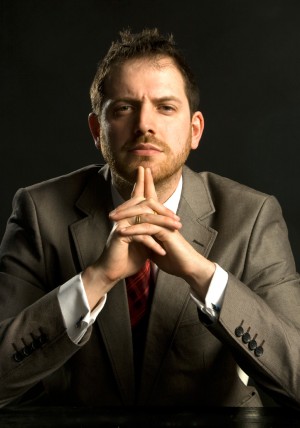
With each book, though, my dad and I have diverged in our opinions of Joe Abercrombie's storytelling. It's probably a truism to say that his books fall under the "gritty fantasy" subcategory that's gained in popularity since George RR Martin's Song of Ice and Fire series, as they tend to depict violence and depravity to a degree that some have started to find objectionable. My dad happens to be one of those who find it all a bit much.
I'd argue, though, that Abercrombie focuses on that side of fantasy fiction for more than just titillation or "showing things as they are". Gritty fantasy has become the dominant paradigm in the genre, to the point that it's getting to be something of a cliche - everything's dirty, smelly, bloody, encrusted with shit and offal and so on. You can rely on the good guys to be just as bad as their enemies, and for the bad guys to be harboring a lust for violence that frequently verges on the sexual.
However, ironically, I wouldn't call Abercrombie the worst for this kind of thing. Strange as it is to say for an author whose main characters are either torturers or bloodthirsty maniacs, I never find the bloodshed in his books to be gratuitous. Sure, he doesn't flinch from gore, but it's always pretty clear that the people causing the bloodshed aren't to be admired.
Case in point is Logen Nine-Fingers, also known as the Bloody-Nine, one of the protagonists of Abercrombie's opening trilogy, the First Law. Logen is effectively a split personality - usually he's a good POV character to follow, but when the bloodlust comes over him, the Bloody-Nine comes out and becomes a threat to his allies as well as his enemies. The first time the Bloody-Nine comes out in The Blade Itself, you're rooting for him, because he's just dispatched half a dozen or so bad guys on his own.
Badass.
But then he comes out again in the subsequent books, and he slaughters indiscriminately, even to the point of killing children because they happen to be in his way. It gets to the point where instead of hoping the Bloody-Nine comes out again, you worry about what kind of atrocity you're about to read. And some of it can indeed be tough to read.
I was thinking about this while reading Red Country, which happens to be Logen's first appearance since Last Argument of Kings. As I mentioned in a previous post, this fact was spoiled for me, so I spent the book in anticipation of the big reveal. But it hit me that the reason Abercrombie writes this way is because he's writing about the consequences of violence, rather than because he really likes decapitations.
You can see this theme running through each of his standalone books, from Best Served Cold, which is about the corrosive effect of seeking revenge, to The Heroes, which is about the consequences of two enemies not being willing to back down, even when their confrontation is over something completely irrelevant.
Thinking back over the other "gritty fantasy" authors I've read, none of them - including GRRM - takes this approach. I'm not taking shots, as books like Game of Thrones and its sequels are amazing; but it was actually in reading A Feast for Crows that I started to weary of all the sociopaths and deviants crowding Westeros. And while my dad sees only nihilism in Abercrombie's approach, I'd argue he's way more willing to let his characters find redemption than GRRM is - witness the final confrontation between Logen and Caul Shivers, contrasted with the fact in Game of Thrones that the only truly honorable characters, like Ned Stark, end up with their heads on pikes.
"Wait, what happens to me at the end?"
And in the end, I think Abercrombie's stories end up being more true to life because of that. Depictions of life being nothing but nasty, brutish and short end up being just as unrealistic as those suggesting that heroes are always perfectly virtuous and villains always irredeemably bad. It takes a brave writer to show us that a person can choose to stop making bad choices and act altruistically, much more so than reveling in how flawed that person is.
Subscribe to:
Posts (Atom)